Briefing
Introducing dots | OpenAIhttps://openai.com/index/introducing-dots/
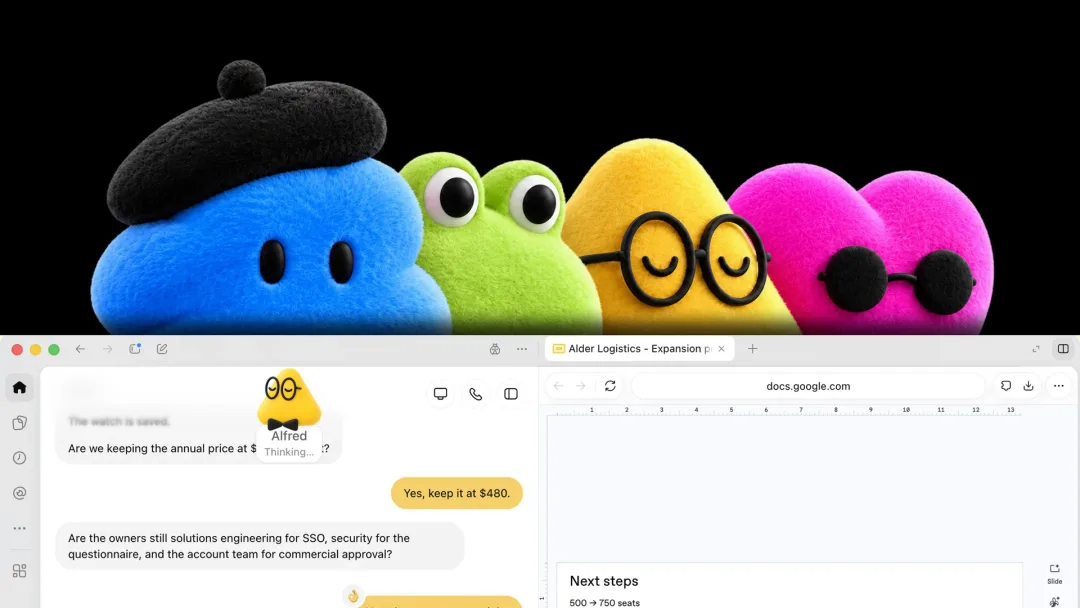
OpenAI announced dots, its always-on agents, on September 29, 2026. A dot is a personal agent that users can name and work with. Powered by GPT-6 Astra, it uses its own cloud computer and browser to handle multiple projects and continues assigned work between conversations.
A dot starts with context from ChatGPT memory. Users choose its connected apps and responsibilities; it uses Codex and connected tools to prepare work for review. Users can give feedback, change direction, or pause it.
Users can message or call their dot in ChatGPT on web, desktop, and mobile, and continue with the same context in Slack and Microsoft Teams. Plugins provide connections to more than 4,000 apps.
OpenAI illustrates these uses:
- Research: Reruns analyses with new data, updates paper figures and explanations, and flags items for review.
- Development: Finds recurring customer requests, implements small improvements, and tests them.
- Content production: Identifies interview moments to clip and prepares show notes and social post drafts.
The rollout covers Pro and Business Premium in eligible markets. Enterprise, Edu, and Healthcare access requires an administrator to enable the beta.
Orchestration
Earlier products include ChatGPT agent and Pulse. Introduced on July 17, 2025, ChatGPT agent combined Operator’s web interaction with deep research, using a virtual computer for research and document creation. Pulse, introduced on September 25, 2025, researched overnight using conversations, memory, and feedback, then presented its findings the next day.
In agent development, orchestration coordinates execution and delegation. OpenAI’s documentation distinguishes handing control to a specialist from having a main agent call other agents as tools.
The Scope of Automation
OpenAI distinguishes work assigned by the user from proactive research. Proactive research involves reading permitted connected sources in the background and saving private notes for the dot.
Proactive research tools are read-only. They cannot message others, change content in connected apps, or control a browser or computer. Actions following that research, as well as work already assigned by the user, remain subject to the usual action rules and checks.
Authorization Boundaries
Auto-review checks certain actions against user instructions, Custom Rules, and safety requirements before execution. Custom Rules can allow, require approval for, or block supported actions, but cannot disable core safety requirements.
Approving one message does not grant ongoing permission to contact people. Disconnecting an app stops new access through that connection, but does not delete information already incorporated into the dot’s context.
Bottlenecks
Human review can become a bottleneck. In March 2026, Anthropic reported that increased code output from engineers had made code review a bottleneck. It also introduced agents to assist with reviews, but left final approval to people. Even when results are produced faster, work can still be delayed if people cannot review and accept them at the same pace.
The work of deciding what to delegate and which results to trust also remains. In its own research and engineering work, Anthropic described a gap between executing a well-specified experiment and choosing which problems to pursue. It also reported more ideas and initiatives than the organization could pursue. This suggests that automating execution can place greater weight on setting goals and priorities.
Adding agents also has limits. A comparison of 180 configurations presented by Google Research found different effects for parallelizable and sequential tasks. Poorly matched coordination could reduce performance or propagate errors. Anthropic’s account of building its multi-agent research system also identified high token costs, dependencies between tasks, and compounding errors during long-running work as limitations.
HER
Her has been a recurring reference in the AI industry’s discussions of conversational AI. In a 2016 interview, Demis Hassabis used the film as a familiar example while emphasizing smartphone assistants that understand context and users’ intentions. In a 2023 conversation, Sam Altman named it his favorite AI film and praised its anticipation of conversational language interfaces.
Dots, which remember users and continue working between conversations, fit into this trajectory. The idea of giving a device a “soul” connects to the experience of an ongoing relationship with an agent that gets to know its user.
Sources
- OpenAI, “Introducing dots”, September 29, 2026.
- OpenAI, “Dots: Always-on agents built to handle everything”, September 30, 2026.
- OpenAI, “DevDay 2026 Recap”, September 29, 2026.
- OpenAI, “Introducing ChatGPT agent”, July 17, 2025.
- OpenAI, “Introducing ChatGPT Pulse”, September 25, 2025.
- OpenAI, “Orchestration and handoffs”, September 30, 2026.
- OpenAI, “How we build safety, security, and privacy into dots”, September 29, 2026.
- OpenAI Help Center, “Dots privacy, security, and safety FAQs”, September 30, 2026.
- Anthropic, “Bringing Code Review to Claude Code”, March 9, 2026.
- Anthropic Institute, “When AI builds itself”, September 30, 2026.
- Google Research, “Towards a science of scaling agent systems: When and why agent systems work”, January 28, 2026.
- Anthropic, “How we built our multi-agent research system”, June 13, 2025.
- The Verge, “DeepMind founder Demis Hassabis on how AI will shape the future”, March 10, 2016.
- Salesforce, “OpenAI CEO Sam Altman: A World Without AI Will Soon Be Unthinkable”, September 19, 2023.