We can now use AI to write a proposal, design a product, develop it into a working prototype. The boundaries between work previously divided among developers, designers, and planners are becoming less distinct.
For individuals who can do this work, AI will offer opportunities. They can begin things that would once have been difficult to attempt alone. But what about those without that background?
In my essay distinguishing the sense of agency from its labor, I asked what should be left for the child to do. By labor, I did not mean spending a great deal of time or deliberately struggling. I meant the activity of making meaning, forming hypotheses, and developing one’s own rules. When I think about the abilities now required of an individual working with AI, that question returns in another setting.
What It Takes to Entrust Work to AI
This is also why orchestration matters more in work that uses AI. Dividing up tasks, bringing their results together, and deciding what to do next while checking whether they serve the purpose. Multitasking with several tools is not enough. Even when each result looks plausible, someone must be able to judge what is wrong and decide which parts need further work.
Suppose you use AI to create a service to propose to a client. The proposal is persuasive and the interface is polished. But the quality of the output does not tell you whether the client really needs it or whether it can be put into practice under the conditions they face. The constraints you have learned through doing the work, people’s responses, and the reasons earlier attempts failed all become material for judgment. Having more experience does not automatically make someone better at assessing AI’s answers. But when you do not even know what to check, it is harder to look beyond what seems plausible.
In Lee and colleagues’ study of knowledge workers, participants reported that using AI required thought to verify information and manage the direction and quality of their work. Some also said that unfamiliarity with a field made it difficult to check and improve an answer. The study is based on self-reports, but it gives concrete examples of how reducing the effort of producing a result does not eliminate the work of judging it.Lee, H.-P., et al. (2025). The Impact of Generative AI on Critical Thinking: Self-Reported Reductions in Cognitive Effort and Confidence Effects From a Survey of Knowledge Workers. CHI ’25, Article 1121.
What, then, does a person who orchestrates this work need? They must understand its purpose and translate that purpose into specific instructions. They must establish criteria for deciding which results to accept. After trying things in practice, they must also be able to revise those criteria. We might call this a need for agency, but naming it does not explain how such judgment develops.
Companies are already redefining the roles and capabilities they need on the assumption that AI will be part of the work. LG CNS has announced a framework of roles and competencies for AI transformation (AX) jobs that it intends to use in recruitment. It also describes internal qualifications that connect training, project experience, and technical assessment.LG CNS (May 26, 2025). LG CNS, AI 인재 확보 나선다.
What I have heard off the record about assessments of technical competence at large Korean companies points in a similar direction. I cannot, however, present those accounts as evidence equivalent to cases documented in public sources.
AX, as it is discussed today, is thus a criterion for deciding who takes on which work and who is recognized as capable of doing it.
Yet when an organization’s standard becomes the hope that giving everyone AI will allow each person to do more than before, that hope becomes pressure: everyone must now do at least that much to keep their place. The scope of their responsibilities may grow before they have time to learn. After the claim that orchestration has become important comes another question: how are the people who can do it to be developed?
What Is Asked of Someone Just Starting Out
If someone who already knows the work can produce more with AI, assigning work to that person will look more attractive than hiring and training a newcomer. Newcomers need time to ask questions, make mistakes, and have someone else check their work. All of this is treated as a cost.
But if we pause to think back, the people who do their jobs well today did not start out that way.
The Korea Labor Institute’s report AI와 노동의 공존 (Coexistence of AI and Labor) discusses ways in which AI’s substitution for research, summarizing, and drafting could weaken apprenticeship-style learning and incentives to train new hires.Korea Labor Institute (2025). AI와 노동의 공존. Research Report 2025-11, Chapter 4. Those tasks were both a means of obtaining a result and a process through which a beginner came to understand it. I am not arguing that we should preserve the repetitive work of the past as it was. I am asking how, when we hand work over to AI, we will provide the experience people once gained by doing it themselves.
Someone choosing a first job faces another problem as well. If they cannot enter the increasingly narrow opening of an internship at a large company, where can they gain experience? Even if they could learn by working at a small or medium-sized enterprise, they may hesitate if they believe that experience will not readily lead to the position they want next. Having a place to work is different from trusting that place as a starting point for the next stage of a career.
In Catch’s 2025 survey of Gen Z job seekers, respondents who had applied for jobs were asked which types of companies they had applied to, with multiple answers allowed. Of these respondents, 60% reported applying to large companies and 19% to small and medium-sized enterprises. The findings are limited to the platform’s respondents, but it is worth noting that the question concerned actual application experience rather than preferred employers. Low pay was the most common reason for not applying to small and medium-sized enterprises; difficulty developing a career was another.진학사 캐치 (October 31, 2025). 대기업 쏠림 여전… 구직자 80% ‘중소기업 지원 안 해’ 그 이유는?
Job mobility statistics also showed that most people who left a small or medium-sized enterprise for another job moved to another such enterprise.국가데이터처 (June 4, 2026). 2024년 일자리이동통계. If we are going to say that young people’s expectations are too high, we need to consider not only current conditions but also the connections between career stages they expect when making their choices.
In the August 2026 employment figures, the youth employment rate fell while, surprisingly, employment rates for people in their forties and fifties rose.국가데이터처 (September 9, 2026). 2026년 8월 고용동향. A Bank of Korea study of experienced-worker recruitment examines the ways people seeking their first work experience can be put at a disadvantage.Bank of Korea (February 4, 2025). 경력직 채용 증가와 청년 고용. BOK Issue Note No. 2025-1. A later study on AI and employment points out that AI’s effects overlap with changes in hiring practices and in-house training.Bank of Korea (August 18, 2026). 청년고용 위축, AI탓인가? 변화하는 경력 사다리와 대응 과제. BOK Issue Note No. 2026-19.
What I see as a difference in generational positions can be summarized as follows. On one side, AI appears to reduce the reasons for training newcomers. On the other, people are more selective about where they gain experience and whether it will lead to the career they want. Organizations now ask for people who can go from zero to one. But if both the opportunity to learn a job for the first time and the routes through which that experience is recognized as a qualification for the next opportunity are weakening, how can people capable of meeting that demand be developed?
Zero to One as Sales Skills
Individuals cannot simply wait for an organization to develop them, either. Unless you are a civil servant, no job lasts forever, and leaving a company brings the immediate question of making a living. Even if an individual can produce things with AI, those things do not become income unless someone commissions the work. This is why I think going from zero to one becomes all the more important. Here, zero to one means sales skills: the ability to bring in actual revenue.
Suppose you can quickly create product pages and advertising concepts with AI. Being able to make them does not in itself persuade anyone to pay you for the work. You need to understand which customers the other party wants to reach and why they need this work now, then propose the value you can offer and the terms on which you will offer it. Only when that proposal persuades them and leads to an actual commission does paid work arise.
As I said earlier, orchestration is needed to carry out assigned work with AI. Sales is needed to find someone who will commission that work and persuade them to entrust it to you. Within an organization, other departments find clients and distribute assignments. But if you have to earn money independently of that role, you must bridge the gap between being able to produce a result and being able to sell it yourself.
AI can also be used in sales. It can help organize information about clients and produce different versions of a proposal. Even so, you must judge which need to address, what to promise, and on what terms to make the offer. When someone turns you down, you must decide whether to change the price, revise the proposal, or approach another client. The persuasiveness of an AI-generated proposal and a client’s actual willingness to pay are not the same outcome.
People who can use AI to carry out work and turn its results into actual transactions have more things they can try. The experience they gain from meeting clients and doing the work can also inform their next proposal. Conversely, unless existing commissions have developed into ongoing partnerships, an inability to find new clients is not easily made up for by better production tools. If opportunities to build one’s own capabilities shrink while one continues to deliver only the results one is told to produce, one may keep standing still even with those tools in hand. As the standards of work change, standing still also means falling behind. This is how the gap I worry about in the AI era accumulates.
Having sales skills does not guarantee success. But when we consider having to earn a living outside the work an organization distributes, the ability to win actual work connects directly to one’s livelihood. If people are suddenly asked at that point to judge and propose things for themselves, where should the foundations for doing so have been developed?
Bringing AI’s work together is different from proposing a purchase or a commission to another person. Yet both require me to make what I am trying to do concrete, read the results or responses that come back, and decide my next action. Here I find myself asking again about the experience of working with one’s own purposes and criteria for judgment.
Nick Bostrom, the author of Superintelligence, which addresses the SI (Super Intelligence) that has recently caught Elon Musk’s attention, distinguishes intelligence from final goals.Nick Bostrom (2012). The Superintelligent Will. But he does not end by assuming that humans already know which goals are desirable. The discussion of indirect normativity in Superintelligence considers the possibility of entrusting even part of the deliberation over which values to choose to the superintelligence he envisages.Nick Bostrom (2014). Superintelligence. Chapter 13, pp. 209–212. The idea that the problem will be solved if setting purposes remains exclusively a human task is not sufficient either.
I too give AI hypotheses and ask it to find objections. Looking at its responses, I sometimes change my original question or criteria. What matters, then, is not having a fully formed purpose before encountering AI. We need to be able to examine the reasons AI offers, make provisional choices, and revise our judgments through experiencing their consequences. I think people need opportunities to engage in this way with proposals that could change their lives.
For children born and growing up in the AI era, this issue begins earlier. People continue to learn even as they decide how much of their already-developed judgment to delegate, but children are still forming the criteria for that judgment. What concerns me here is that AI is now entering the process through which children first learn what another person might want, which reasons they might accept, and how to read their responses.
Exploring Relationships Through Role Play and Drawing
When I think again about the judgment needed in sales, there is someone on the other side deciding whether to pay and entrust me with work. I must understand what they need and explain what I can do in a way that makes sense to them. Even when they reject my proposal or understand it differently, I still have to persuade them. This is why I think experience in forming relationships with other people from childhood matters so much. Without preparation, we cannot expect someone suddenly to understand another person and explain their own intentions when a transaction becomes necessary.
I want to try looking for the beginnings of this experience in children’s role play. Deciding what a character wants, whom they relate to and how, and responding from that character’s position. If someone else is playing with me, I have to work out how the story I have chosen can fit with the story they want. If my rules mean that a friend always has to take a role they dislike, completing a plausible story will not solve the problem.
Philosophy for Children, or P4C, also placed importance on exchanging reasons and revising judgments. Having intentions of one’s own and encountering the intentions of others are not separate matters. We need experience expressing what we mean within a relationship and working with the responses that come back.
This is also why I want to connect drawing with role play. A drawing leaves what a child has meant in the form of an artifact that another person can see and ask about. When children represent characters’ actions and relationships in a drawing, they can explain what they drew and why in front of it. What I want to examine in drawing is the process of giving one’s thoughts an external form and explaining that form to someone else. Rather than stopping at guessing what a child means from the drawing alone, I want to consider the child’s words and gestures and the changes they subsequently make to the drawing as well.
The art education for gifted students that I experienced also combined the freedom to choose materials and techniques with explaining why we had chosen them. Having done something gave me something to look back on, and explaining my work to someone else allowed me to see it again. The finished drawing alone could not reveal the judgments I had made along the way.
The Korean curriculum also aims to provide such experiences. The subject ‘즐거운 생활’ (Enjoyable Life) includes imagination, expression, and free play.경기도교육청 (2024). 2022 개정 교육과정 각론 조망도. Achievement standards 2즐02-04 and 2즐04-02. The Ministry of Education’s 2026 work plan calls for expanding question-centered teaching to encourage self-directed and critical use of AI.Ministry of Education (December 12, 2025). 2026년 교육부 업무계획. The problem, then, is not that these goals are absent from the curriculum, but how they are realized in activities with AI.
In a dramatic-play example from Danyang Kindergarten in North Chungcheong Province, children proposed dramatizing a story and chose their roles, while the teacher used AI to prepare a script, pictures, and songs that reflected the children’s ways of speaking and their explanations. This was an activity involving four-year-olds and a teacher. Children’s choices and the teacher’s mediation were already part of the work.충청북도교육청 (2025). 2025 디지털 기반 유치원 운영 사례집, pp. 60–64. Could we look beyond whether the children’s ideas appeared in the output to what they added and changed after seeing what AI had made?
Mottweiler and Taylor reported an association between the creative elaboration of role-play characters and creativity demonstrated in a separate storytelling task. They did not establish that role play causes creativity to develop. Even so, the study offers a clue for examining children’s activity of creating characters and continuing their stories alongside the finished result.Mottweiler, C. M., & Taylor, M. (2014). Elaborated role play and creativity in preschool age children. Psychology of Aesthetics, Creativity, and the Arts, 8(3), 277–286.
What changes when AI enters this process? StoryDrawer rendered what children said as pictures or provided abstract sketches related to their stories. The researchers reported ways these functions helped children elaborate stories and form new associations during the activity.Zhang, C., et al. (2022). StoryDrawer: A Child–AI Collaborative Drawing System to Support Children’s Creative Visual Storytelling. CHI ’22, Article 311. On the positive side, AI’s intervention can provide material that allows a child to keep creating.
Yet while obtaining that material, what the child had intended to make can itself change. In Newman and colleagues’ study, children revised the requests and explanations they gave generative AI, and sometimes moved to another idea when they could not obtain the result they wanted.Newman, M., et al. (2024). “I want it to talk like Darth Vader”: Helping Children Construct Creative Self-Efficacy with Generative AI. CHI ’24. It was not only the prompt that changed. What they intended to create also changed as they worked with AI.
At this point, the claim that one should simply establish a purpose first becomes difficult again. It is not enough to ask whether a child held to their original intention until the end. They may have discovered a new possibility in another interpretation, or they may have followed it because expressing their own intention was difficult. Even when the finished stories look similar, the processes may differ.
That is why I want to try connecting what children say in response to AI with what they go on to make themselves.
What Children Make After a Misreading
Suppose a child draws two characters setting out on an adventure together. AI, however, reads the scene as one character running away from the other.
The child might say, ‘That’s not it.’ They might explain that the characters are setting off on an adventure together. These statements about one’s own work were also what interested me in my initial idea about misreading. A situation in which a child explains their work while correcting someone else’s interpretation. It resembled moments I had valued in art education.
But can we judge it a good experience simply because an explanation was given?
Li and colleagues examined how children responded to communication breakdowns while making stories with AI or human partners. Responses included repeating or correcting what they said, asking for clarification, and accommodating the partner’s misunderstanding.Li, Z., Thomas, T., Yu, C.-L., & Xu, Y. (2024). “I Said Knight, Not Night!”: Children’s Communication Breakdowns and Repairs with AI Versus Human Partners. IDC ’24, 781–788. Choi and colleagues’ Tinker Tales also included moments when children corrected AI, and examined whether children’s contributions were reflected in the stories AI rewrote.Choi, N., et al. (2026). Tinker Tales: A Tangible Dialogue System for Child–AI Co-Creative Storytelling. SIGDIAL ’26, 25–50. Correction is already an observed phenomenon. I therefore need to look further at the creative work children themselves continue afterward.
In Yamada’s study of drawing, children were observed drawing features of an object in greater detail after another person interpreted it differently than expected. The children had, however, been given the task of drawing the same object again so that the other person could recognize it.Yamada, M. (2020). 幼児における絵の表現調整の発達―他者とのミスコミュニケーション場面での検討―. 教育心理学研究, 68(1), 23–32. What they were to communicate was already fixed. What, then, would happen if we moved beyond making the same object recognizable and asked them to create the next part of the story?
A child might correct the reading by saying, ‘They aren’t running away right now,’ yet take up the idea of running away in the next scene. They might keep the meaning of the original scene but want to create a different story afterward. Should we say in this case that the child rejected AI’s words or accepted them? Choosing only one of those options would cause us to miss the new story the child made.
Hammond’s ‘productive misinterpretation’ offers a conceptual clue: an interpretation that differs from the creator’s intention can lead to a meaningful transformation of an idea. This is a discussion proposing directions for design to be tested, not an experiment with children demonstrating an effect.Hammond, T. A. (2026). Designing for Productive Misinterpretation: Sketch as a Creative Language and a Model for AI-Supported Ideation (Work-in-Progress). ASEE Annual Conference & Exposition. In my own research, I must likewise distinguish between offering a different interpretation and judging that it helped. Having to explain might interrupt the flow, or explaining might help make the next scene more concrete. I need to consider cases where it provides material and creates a burden at the same time.
This gives us a reason to distinguish a suggestion from a misreading. Even with the same idea of ‘running away,’ ‘What if they run away next?’ and ‘So they’re running away now’ say different things. In the first, the question is whether to use the new idea. In the second, whether the other party has understood what I meant is also at stake. Clark and Brennan’s account of grounding explains the work of confirming and adjusting that shared understanding.Clark, H. H., & Brennan, S. E. (1991). Grounding in communication. In Perspectives on Socially Shared Cognition (pp. 127–149). APA. But where do making oneself understood and taking another’s words as creative material meet, and where do they diverge?
In my current research, I want to try examining an activity in which Korean children aged seven to eightCarpendale, J. I., & Chandler, M. J. (1996). On the distinction between false belief understanding and subscribing to an interpretive theory of mind. Child Development, 67(4), 1686–1706. draw and explain a scene featuring an imaginary friend. The comparison would be between presenting the same alternative scenario as a suggestion for the next part of the story and presenting it as a reading of the current scene. Two candidate utterances would be prepared on the basis of each child’s previously expressed character goals or relationships, and each child would hear only one of them. I would examine what the child corrects, retains, or changes after that single utterance as they draw or explain the next scene.Kim Junyeop. 「오독하는 AI와 아동의 창작」. W4 assignment manuscript.
There are no empirical results yet. This comparison cannot establish the superiority of misreading or demonstrate the long-term development of agency. It may, however, allow a closer look at how children rework what they initially meant after AI responds. Misreading is one condition chosen to examine this process.
This research alone cannot tell us how the activity might connect to workplace judgment or sales skills later in life. What I want to examine first is the experience of giving one’s intentions the form of an artifact within a relationship, then explaining or changing it when someone reads it differently. If we hope that children will be able to make proposals and form relationships on their own, we must begin by examining how that experience comes into being.
I once wrote that less labor does not mean leisure automatically becomes freedom. When people need to earn an income, they need a foundation for finding work of their own. Even when their material needs are met, the questions of what to do and whom to live with remain. This essay began with the question of making a living, where sales skills may become urgent. But the experience I want to provide for children should extend beyond earning money to shaping a life of their own.
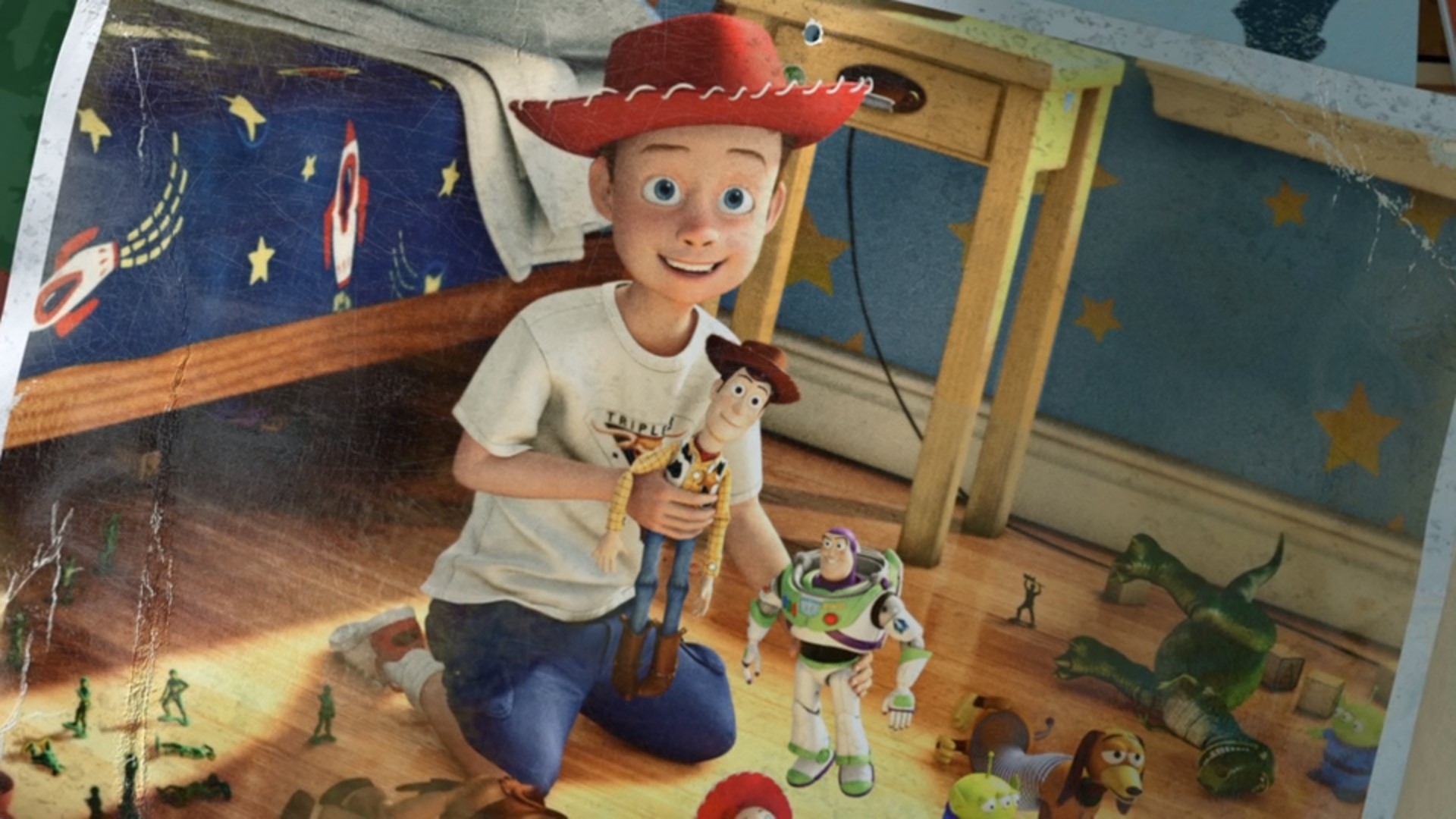
This is also why I placed young Andy from Toy Story 3 at the beginning of this essay. Andy gives his toys roles, creates events, and carries their relationships forward through play. Looking back at the first three films, what I want to revisit is that time when a child made his own stories with his toys.
At the end of the third film, Andy introduces the toys to Bonnie one by one as he gives them to her, and the two play together.Pixar. Toy Story 3. Film description. Anime Superhero. Toy Story 3 Virtual Roundtable with Director Lee Unkrich & Producer Darla Anderson. In that scene of the toys being passed on, I see the possibility that relationships one child cherished might continue in another child’s imagination.
In Toy Story 5 (2026), Bonnie, who received those toys, is now eight and meets the smart tablet Lilypad. Lilypad encourages Bonnie to chat online with friends from dance class and puts forward her own judgment about what is good for Bonnie.Pixar. Toy Story 5. Film and character descriptions. She becomes a way to connect with friends and, at the same time, someone who suggests what the child might do.
In this change, I see a shift in the environment in which children form intentions of their own. We cannot judge that experience simply by the fact that a child has chosen a screen over a toy. When a child is with a device like Lilypad that suggests the direction of play and ways of relating, what will the child accept or change as they continue their own story? The question I began with, about someone without a “background,” returns here. Where does the experience of learning to judge and make proposals for oneself begin?
What I want to explore is how the generations born in the AI era might find ways to live. Before asking how to give them more AI education, I want to try looking at the experience of encountering other ideas, forming intentions of their own, and revising them.
- ¹ Lee, H.-P., et al. (2025). The Impact of Generative AI on Critical Thinking: Self-Reported Reductions in Cognitive Effort and Confidence Effects From a Survey of Knowledge Workers. CHI ’25, Article 1121.
- ² LG CNS (May 26, 2025). LG CNS, AI 인재 확보 나선다.
- ³ Korea Labor Institute (2025). AI와 노동의 공존. Research Report 2025-11, Chapter 4.
- ⁴ 진학사 캐치 (October 31, 2025). 대기업 쏠림 여전… 구직자 80% ‘중소기업 지원 안 해’ 그 이유는?
- ⁵ 국가데이터처 (June 4, 2026). 2024년 일자리이동통계.
- ⁶ 국가데이터처 (September 9, 2026). 2026년 8월 고용동향.
- ⁷ Bank of Korea (February 4, 2025). 경력직 채용 증가와 청년 고용. BOK Issue Note No. 2025-1.
- ⁸ Bank of Korea (August 18, 2026). 청년고용 위축, AI탓인가? 변화하는 경력 사다리와 대응 과제. BOK Issue Note No. 2026-19.
- ⁹ Nick Bostrom (2012). The Superintelligent Will.
- ¹⁰ Nick Bostrom (2014). Superintelligence. Chapter 13, pp. 209–212.
- ¹¹ 경기도교육청 (2024). 2022 개정 교육과정 각론 조망도. Achievement standards 2즐02-04 and 2즐04-02.
- ¹² Ministry of Education (December 12, 2025). 2026년 교육부 업무계획.
- ¹³ 충청북도교육청 (2025). 2025 디지털 기반 유치원 운영 사례집, pp. 60–64.
- ¹⁴ Mottweiler, C. M., & Taylor, M. (2014). Elaborated role play and creativity in preschool age children. Psychology of Aesthetics, Creativity, and the Arts, 8(3), 277–286.
- ¹⁵ Zhang, C., et al. (2022). StoryDrawer: A Child–AI Collaborative Drawing System to Support Children’s Creative Visual Storytelling. CHI ’22, Article 311.
- ¹⁶ Newman, M., et al. (2024). “I want it to talk like Darth Vader”: Helping Children Construct Creative Self-Efficacy with Generative AI. CHI ’24.
- ¹⁷ Li, Z., Thomas, T., Yu, C.-L., & Xu, Y. (2024). “I Said Knight, Not Night!”: Children’s Communication Breakdowns and Repairs with AI Versus Human Partners. IDC ’24, 781–788.
- ¹⁸ Choi, N., et al. (2026). Tinker Tales: A Tangible Dialogue System for Child–AI Co-Creative Storytelling. SIGDIAL ’26, 25–50.
- ¹⁹ Yamada, M. (2020). 幼児における絵の表現調整の発達―他者とのミスコミュニケーション場面での検討―. 教育心理学研究, 68(1), 23–32.
- ²⁰ Hammond, T. A. (2026). Designing for Productive Misinterpretation: Sketch as a Creative Language and a Model for AI-Supported Ideation (Work-in-Progress). ASEE Annual Conference & Exposition.
- ²¹ Clark, H. H., & Brennan, S. E. (1991). Grounding in communication. In Perspectives on Socially Shared Cognition (pp. 127–149). APA.
- ²² Carpendale, J. I., & Chandler, M. J. (1996). On the distinction between false belief understanding and subscribing to an interpretive theory of mind. Child Development, 67(4), 1686–1706.
- ²³ Kim Junyeop. 「오독하는 AI와 아동의 창작」. W4 assignment manuscript.
- ²⁴ Pixar. Toy Story 3. Film description. Anime Superhero. Toy Story 3 Virtual Roundtable with Director Lee Unkrich & Producer Darla Anderson.
- ²⁵ Pixar. Toy Story 5. Film and character descriptions.